
Qwen Open Source: Which Alibaba Qwen Models Are Open-Weight, and Under What License
Qwen alibaba publishes a large share of its Qwen (Tongyi Qianwen) family as downloadable open-weight models, many under the permissive Apache License 2.0, while a few sit under a source-available or research-only Qwen license. “Open weight” is not identical to “open source,” and the exact terms depend on the specific model you pick.
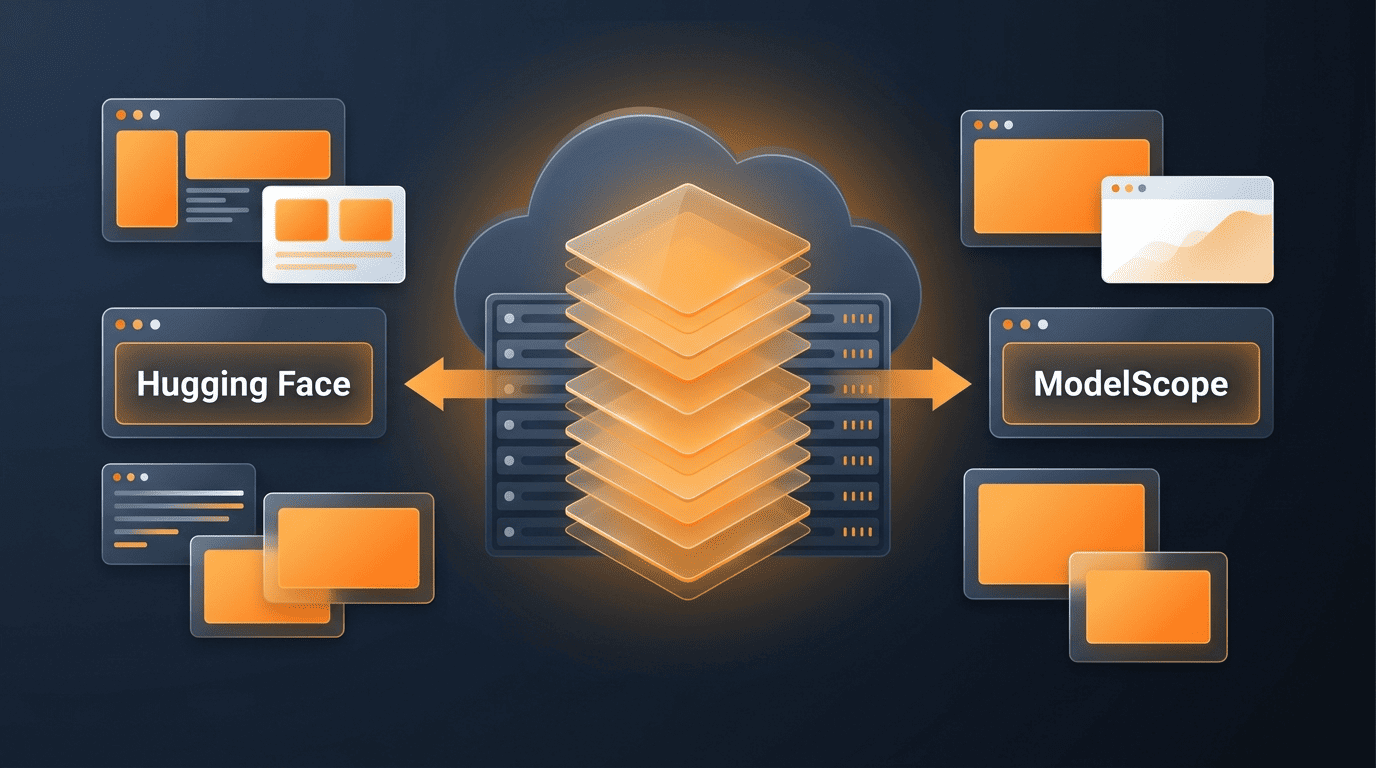
Alibaba Cloud develops Qwen and releases the weights on Hugging Face and ModelScope, alongside code and inference examples on GitHub. Unofficial. This site is not affiliated with, endorsed by, or sponsored by Alibaba or the Qwen team.
Is Qwen open source? Open-weight, precisely defined
The short, precise answer is that Qwen ships as open-weight releases rather than a single uniform open-source license — the label that fits depends on which model and which size you’re looking at.
The short answer
Qwen (Tongyi Qianwen, 通义千问) is developed by Alibaba Cloud, according to Wikipedia. The first Qwen models appeared in 2023, with a beta release in April and broader public access from September that year. Since then, Alibaba Cloud (also referred to simply as Alibaba or the Qwen team) has released successive generations as models that anyone can download, run, and fine-tune, subject to the license attached to that specific repository.
Open weight vs open source — the distinction people miss
“Open weight” means the trained parameters are published so you can run, fine-tune, and redistribute the model, subject to its license. Strict “open source,” by contrast, usually also implies the training code and a reproducible training recipe released under an OSI-approved license — not just the finished weights. This distinction matters for Qwen because the two labels get used interchangeably in casual conversation but point to different guarantees.
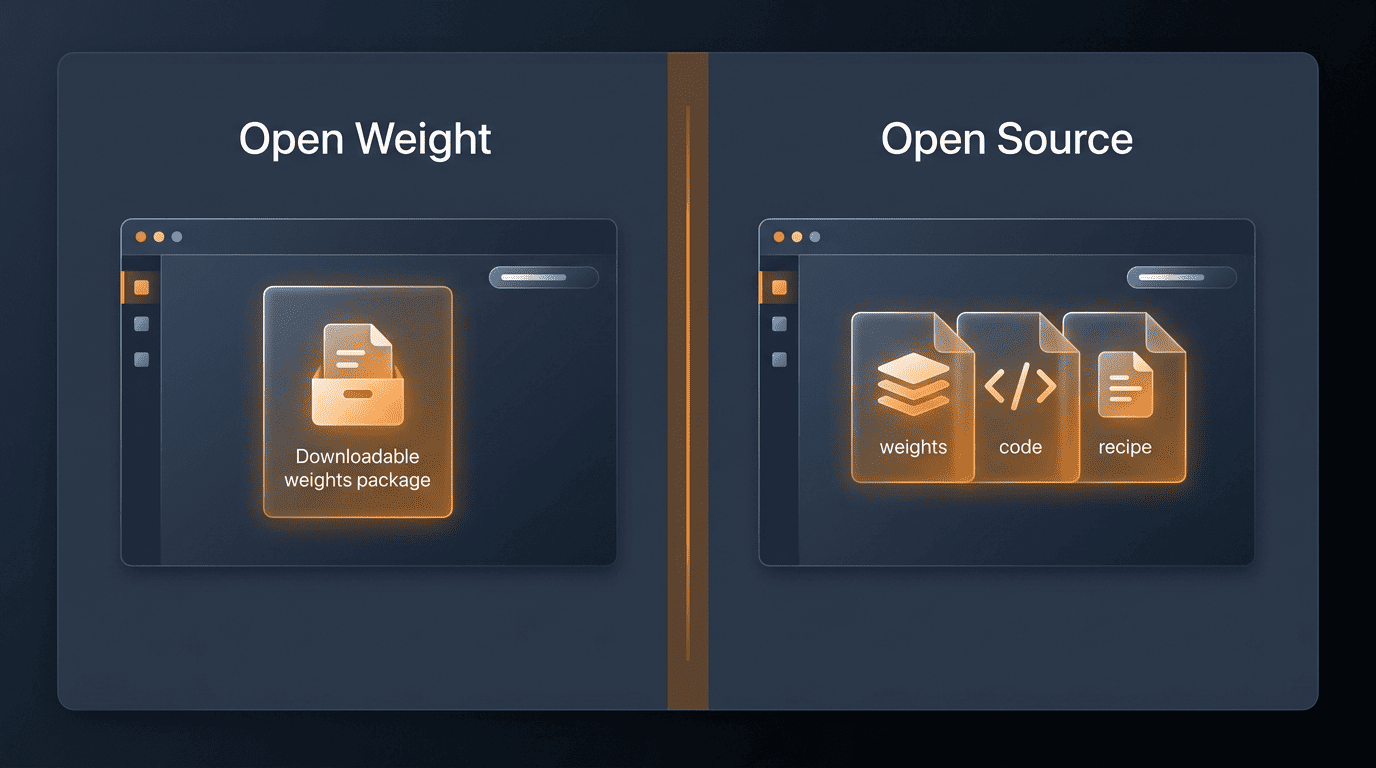
Qwen releases under the Apache License 2.0 carry a genuine OSI-approved permissive license on the released artifacts, which is why people reasonably call those builds “open source.” Models released under the Qwen License or the Qwen Research License are source-available or non-commercial instead — they let you inspect and download the weights, but they are not OSI-approved open source in the strict sense. Alibaba has not published the full training data or a fully reproducible training recipe for its models, so even the Apache-licensed releases are best described as open weight with an open-source-grade license on top, rather than “fully open source” in the academic sense.
Which Qwen models are open — and under which license
Alibaba Cloud has released several generations of Qwen models plus specialized variants, and the licensing pattern differs by line and by size rather than following one blanket rule.
The open-weight lineage
The confirmed generations, as documented by Alibaba and the Qwen team, include:
- Qwen (1.0) — the original release, first available in 2023
- Qwen1.5 — an intermediate generation refresh
- Qwen2 — released in June 2024
- Qwen2.5 — released in September 2024
- Qwen3 — released in April 2025
Alongside the general-purpose line, Alibaba maintains specialized Qwen models: Qwen-Coder and Qwen2.5-Coder for code generation, Qwen-VL / Qwen2-VL / Qwen2.5-VL for vision-language tasks, Qwen-Audio for audio, Qwen-Math for mathematical reasoning, and QwQ as a dedicated reasoning line. Across generations, models ship in many sizes — from small dense models around 0.5B parameters up to large dense models and Mixture-of-Experts variants — described qualitatively here since exact configurations vary by release and are best confirmed on each model’s own card.
Licensing per model (attribute, do not overstate)
| Model line | Modality | Typical licensing note |
|---|---|---|
| Qwen1.5 / Qwen2 / Qwen2.5 / Qwen3 (most sizes) | Text / general-purpose | Commonly released under Apache License 2.0 |
| Qwen-Coder / Qwen2.5-Coder | Code | Mix of Apache 2.0 and Qwen-specific license depending on size |
| Qwen-VL / Qwen2-VL / Qwen2.5-VL | Vision-language | Mix of Apache 2.0 and Qwen License depending on release |
| Qwen-Audio | Audio | Qwen-specific license terms on some releases |
| Some larger or earlier Qwen sizes | Text | Qwen License or the non-commercial Qwen Research License |
The license is set per model, not for the qwen by alibaba family as a whole — the same generation can include both an Apache-2.0-licensed size and a size released under the more restrictive Qwen License. Always read the LICENSE file or model card on the exact repository before you use, redistribute, or build a product on a given Qwen model.
The developer, Alibaba, has released the weights for many of these models with a permissive license (Apache 2.0) while gating others under the more restrictive Qwen License or Qwen Research License, meaning licensing terms vary across the model family rather than following one blanket rule.— Wikipedia, “Qwen”
Where to download Qwen open-weight models
Official Qwen weights, code, and documentation are spread across a small number of channels maintained by Alibaba Cloud and the Qwen team, and it is worth knowing which one serves which purpose before you go looking.
Official channels
| Platform | What it hosts | URL |
|---|---|---|
| Hugging Face | Weights, model cards, per-model license text | huggingface.co/Qwen |
| ModelScope | Alibaba’s own model hub — weights plus demos | modelscope.cn |
| GitHub | Code, inference examples, release announcements | github.com/QwenLM |
| Qwen blog | Release notes and technical writeups | qwenlm.github.io |
Whichever platform you download from, always read the LICENSE file or model card on that specific repository before use — the terms are attached per model, not per platform.
Commercial use: what the Apache 2.0 grant does and doesn’t allow
For the Qwen models released under the Apache License 2.0, the license is short and well understood, but the caveats that apply to non-Apache Qwen releases are just as important.
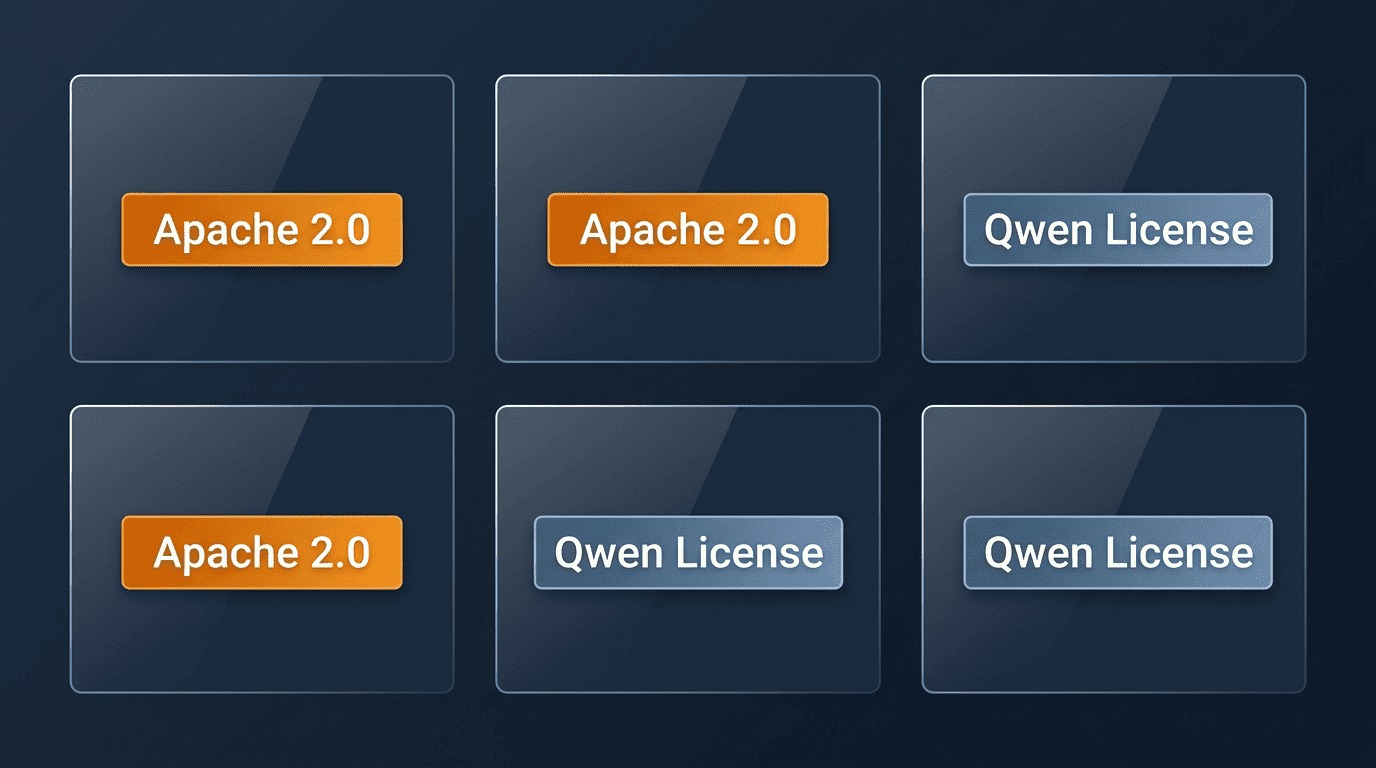
Under the Apache License 2.0, for models released that way, you generally can:
- Use the model commercially, including in paid products
- Modify the weights or wrap them in your own pipeline
- Redistribute the model or derivatives, including sublicensing
- Rely on the included patent grant covering the licensed contribution
- Do all of the above without paying a license fee, provided you retain the license text and any NOTICE/attribution requirements
That said, before you assume any given Qwen model is unrestricted, check for these caveats:
- Models under the Qwen License or the Qwen Research License may add restrictions, such as research-only or non-commercial use, or additional terms not present in Apache 2.0
- The Apache 2.0 grant applies “as is,” without warranty — Alibaba makes no commercial support commitment through the license itself
- Attribution and NOTICE requirements still apply even for permissive Apache-licensed models
- License terms can differ by size within the same model generation, so a small variant being Apache 2.0 doesn’t guarantee a larger sibling is too
Do not assume a specific user-count threshold, a fee, or a blanket commercial ban applies across the whole Qwen line — those specifics, where they exist, live on the individual model’s own license page.
Self-hosting Qwen: what open weights enable
Because Qwen ships as open weights, you are not limited to a hosted API — you can run the model yourself, on your own hardware or cloud account, subject to its license.
Run it your way
A practical path to self-hosting an open-weight Qwen model looks roughly like this:
- Pick the model line and size that fits your task and your compute budget
- Open its model card on Hugging Face or ModelScope and read the license before downloading
- Download the weights and load them with a common open inference runtime
- Test the model on a representative sample of your own data or prompts
- Fine-tune on private data if you need domain-specific behavior, respecting the license’s terms on derivatives
- Deploy locally or on your own cloud infrastructure once testing checks out
- Monitor compute usage — larger dense models and Mixture-of-Experts variants need meaningfully more resources than the smaller sizes
Smaller Qwen sizes suit modest hardware, while larger dense models and Mixture-of-Experts variants need substantially more compute — the practical implication is that self-hosting is a spectrum, not a single choice. If you’d rather skip infrastructure entirely, alibaba qwen models are also reachable through DashScope, Alibaba Cloud’s managed Qwen API, and Model Studio, Alibaba’s broader GenAI platform — the managed alternative to running weights yourself.
Why Alibaba open-sources Qwen
The rationale commonly cited for Alibaba’s open-weight strategy, as widely reported rather than as an official statement of figures, comes down to a few reinforcing effects.
Open weights drive developer adoption. When developers can download a model for free and run it without a procurement process, they experiment with it, build on it, and write about it — which compounds into mindshare that a closed, API-only model — like OpenAI’s GPT-5.6 Sol or Anthropic’s Claude Fable 5 — would not generate as quickly, since those proprietary flagships cannot be downloaded, self-hosted, or freely fine-tuned.
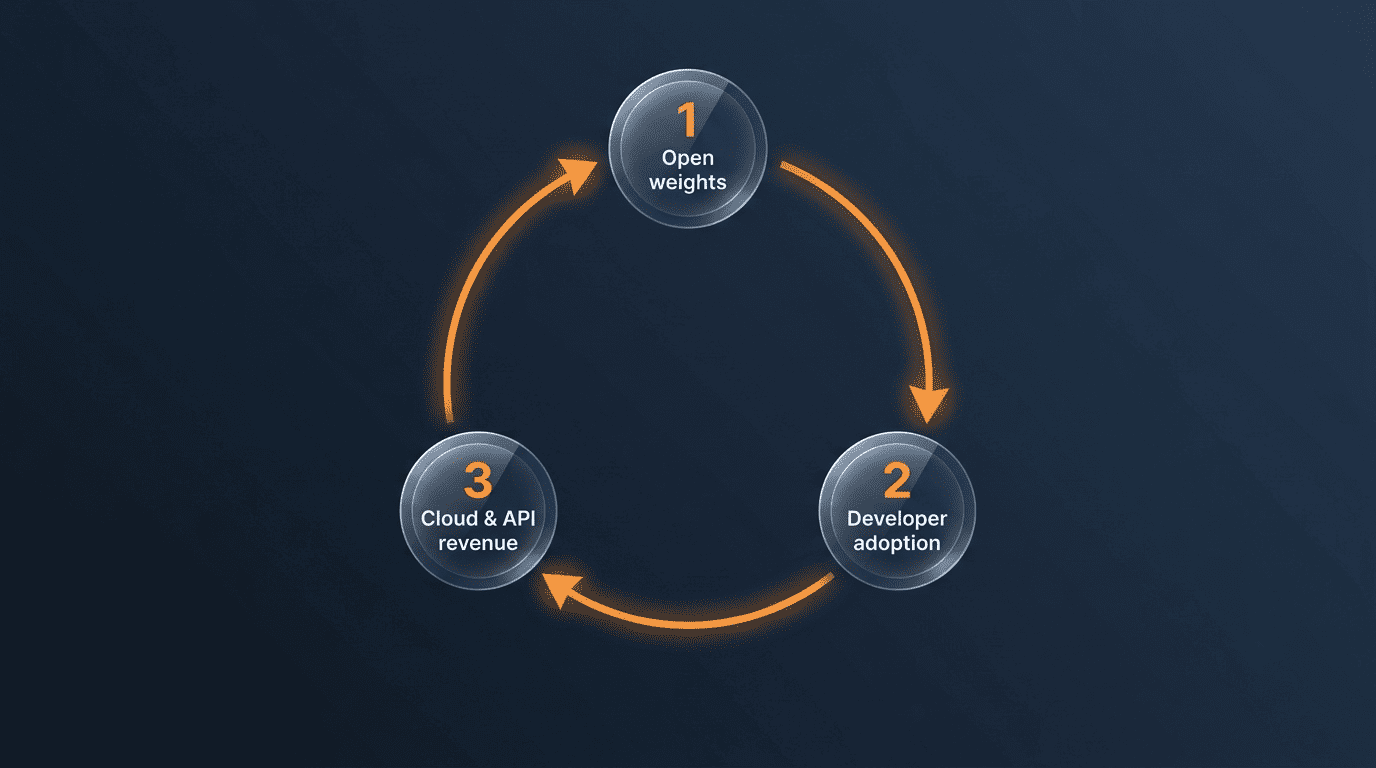
Ecosystem gravity follows the base model. As more tools, fine-tunes, and integrations standardize around Qwen, the family becomes a default choice for new projects, reinforcing further adoption independent of any single release.
Monetization runs through the cloud, not the license. Alibaba’s primary commercial path is reported to be Alibaba Cloud compute and the DashScope / Model Studio API, rather than charging for the model weights themselves — open releases and a paid managed layer are complementary parts of the same strategy rather than a contradiction.
Community adoption: fine-tunes and derivatives
Because Qwen weights are downloadable and often released under Apache 2.0, the model family has become a common base for community work rather than a closed endpoint — the opposite of how the proprietary frontier flagships, OpenAI’s GPT-5.6 Sol and Anthropic’s Claude Fable 5, are distributed, since those ship as hosted APIs with no weights to build on.
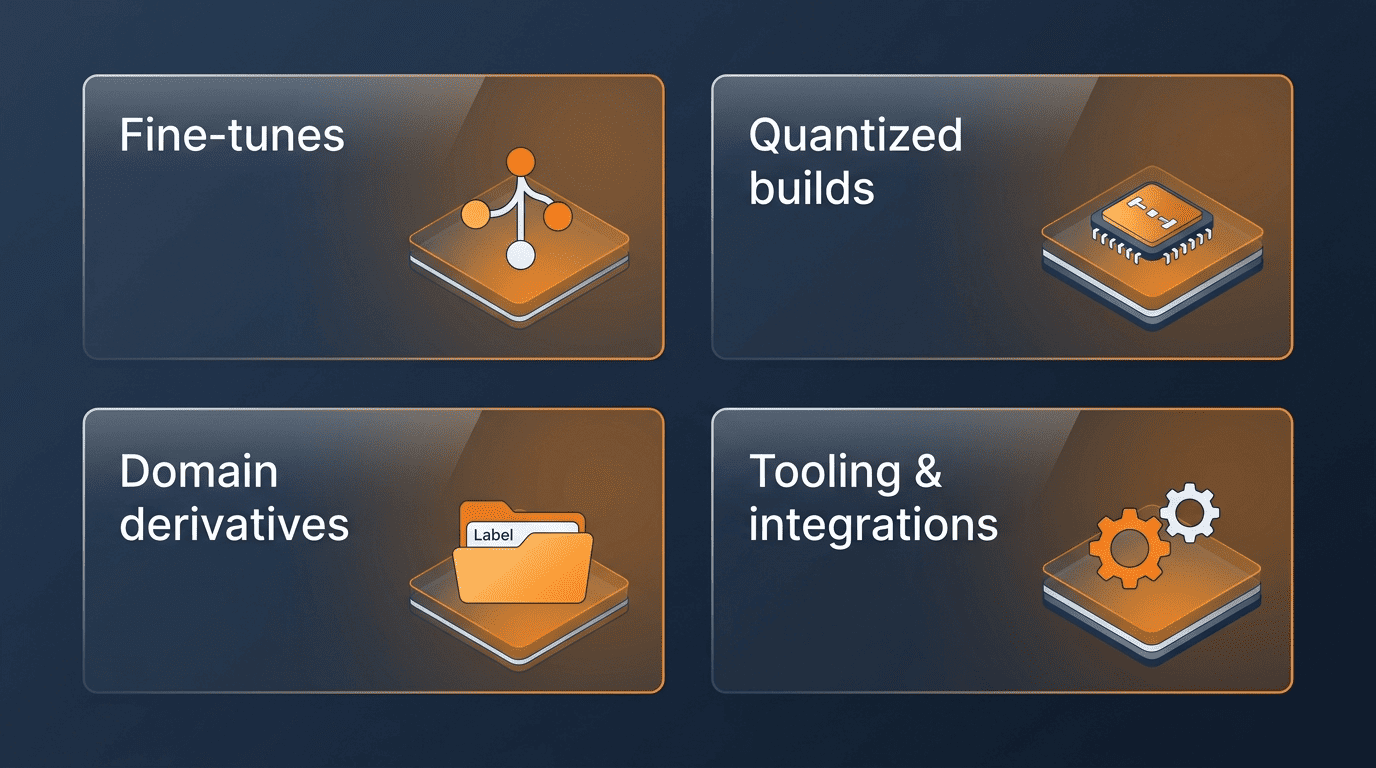
Typical categories of Qwen-based community work include:
- Fine-tunes — Qwen weights adapted with additional training on a narrower dataset or task
- Quantized builds — compressed versions of the weights sized for constrained or consumer hardware
- Domain-specific derivatives — variants tuned for a particular industry, language, or use case
- Tooling and integrations — inference servers, agent frameworks, and app templates built to run Qwen out of the box
Qwen models are frequently reported to rank near the top of public open-weight leaderboards. Exact ranks, benchmark scores, and download counts change too often to state reliably here — check the model’s Hugging Face page or the leaderboard in question directly for current figures rather than relying on any fixed number.